
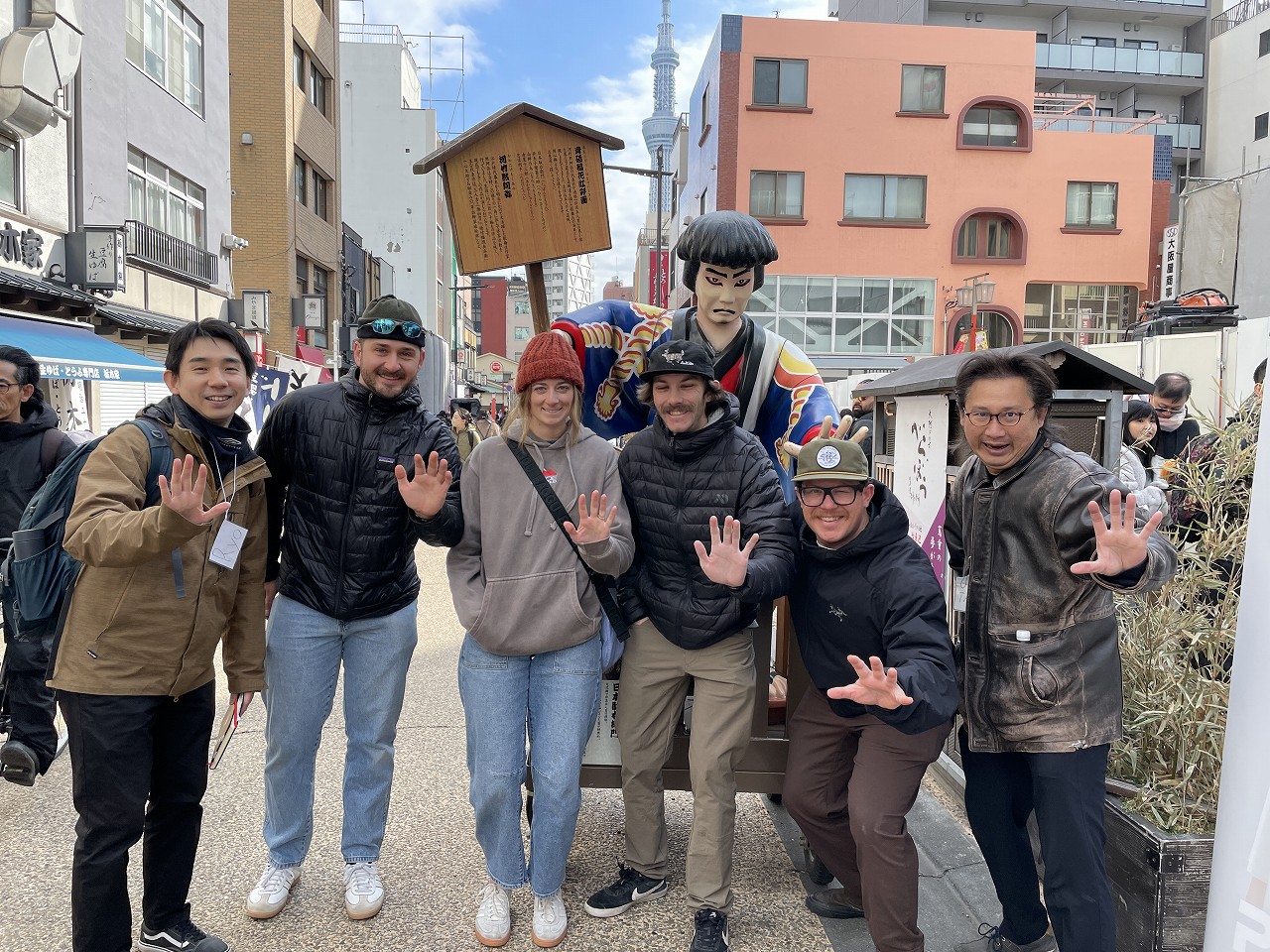
Thank you very much for joining our tours in Asakusa and Yanaka/Nezu on February 12, 2026.
With spring just around the corner, we were delighted to host 13 wonderful guests from the U.S., Australia, Canada, the U.K., and Germany. It was a great pleasure to explore the history and charm of Asakusa and Yanaka/Nezu with you. We sincerely hope that each of you discovered something memorable along the way.
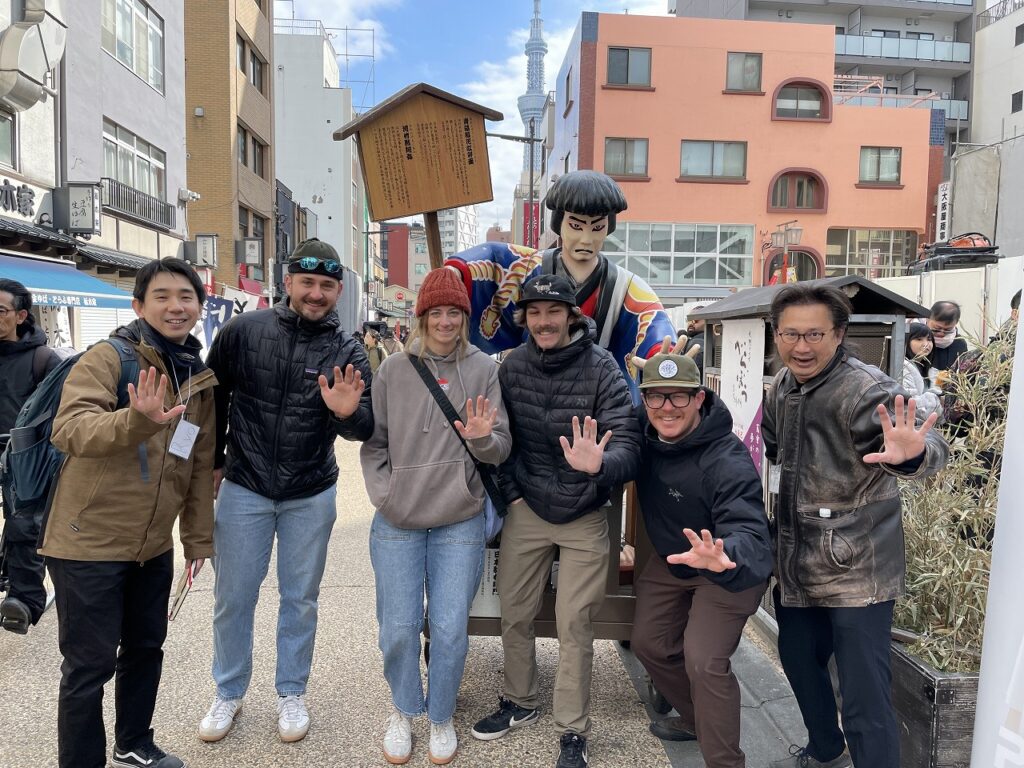
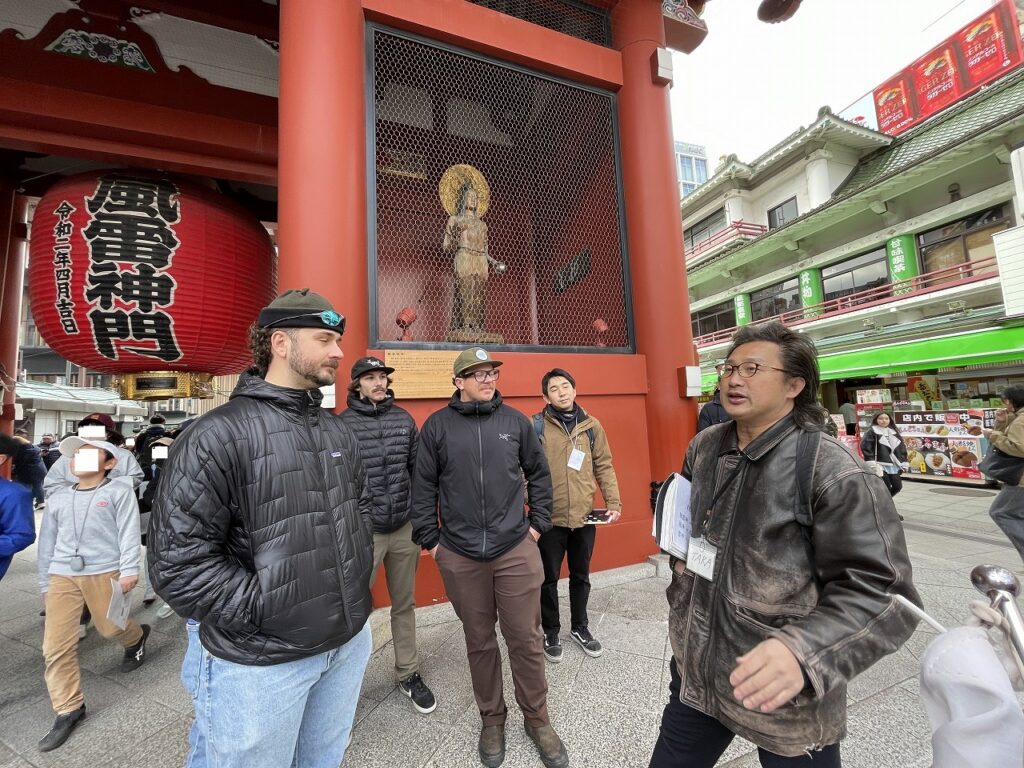
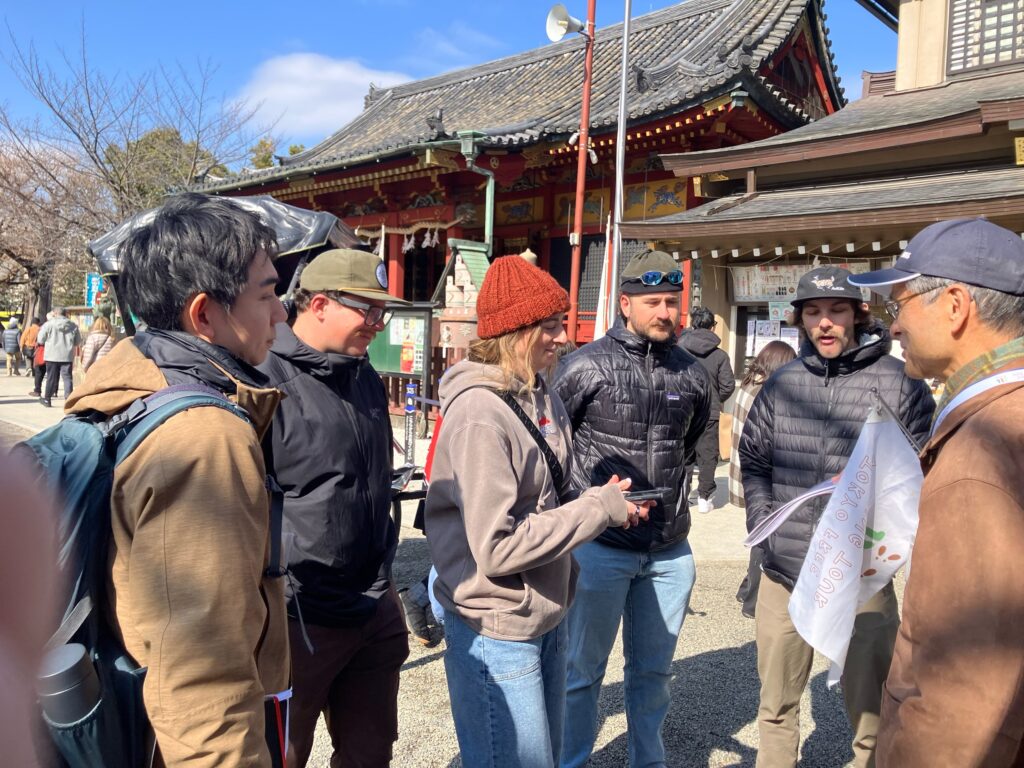
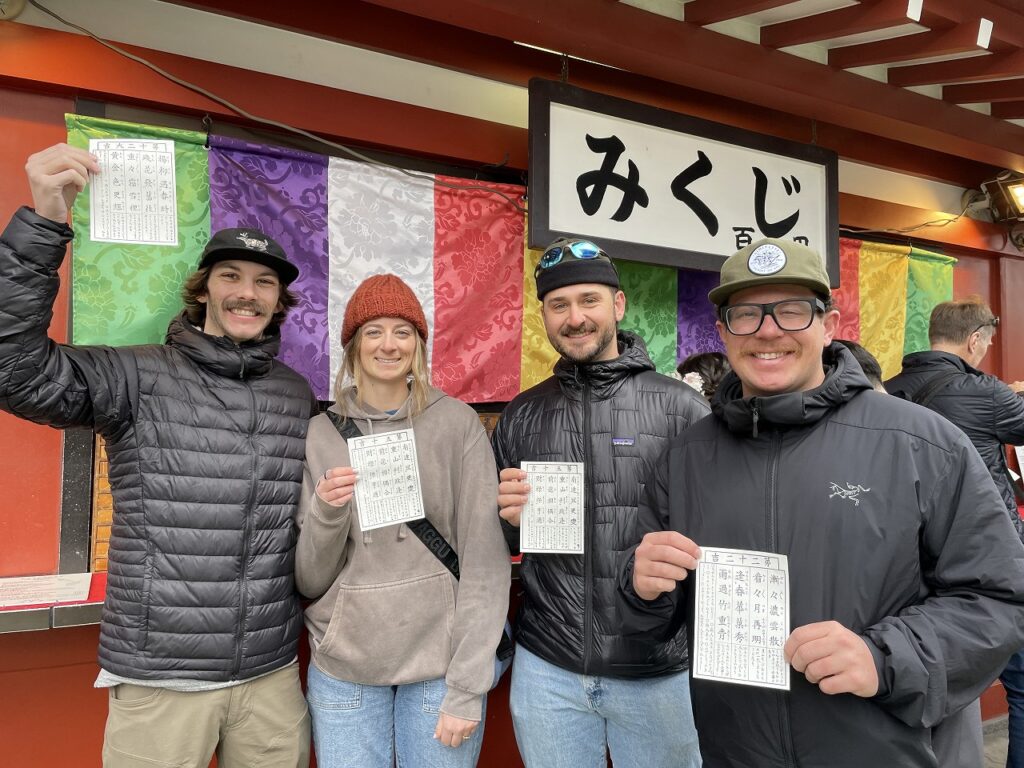
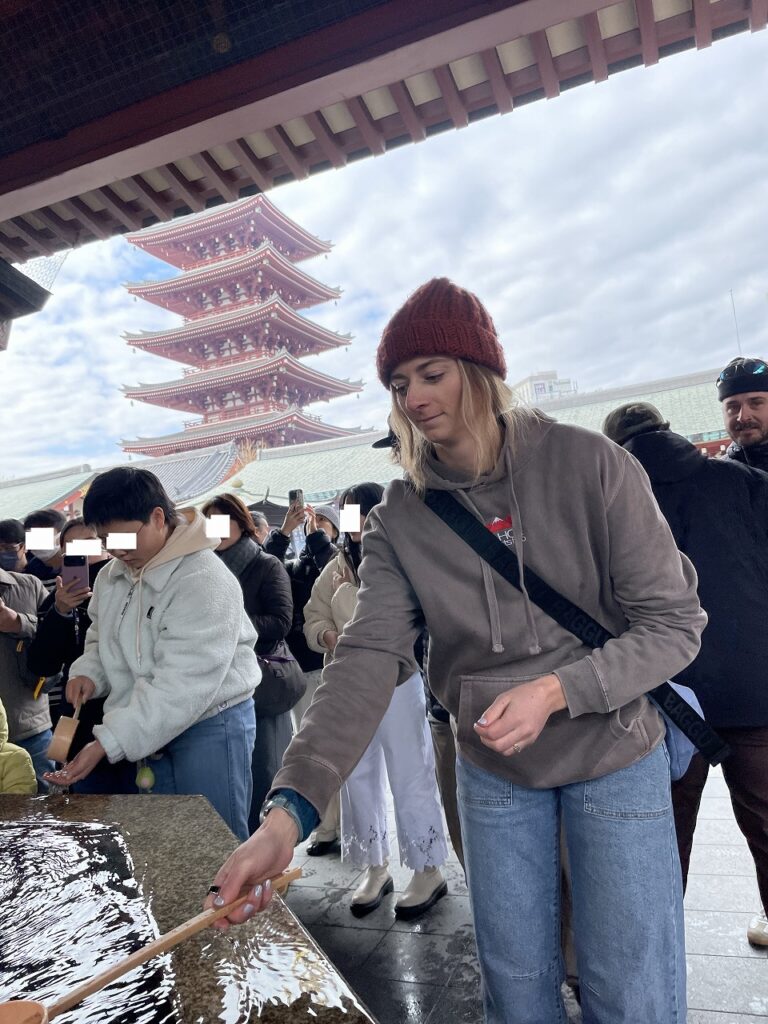
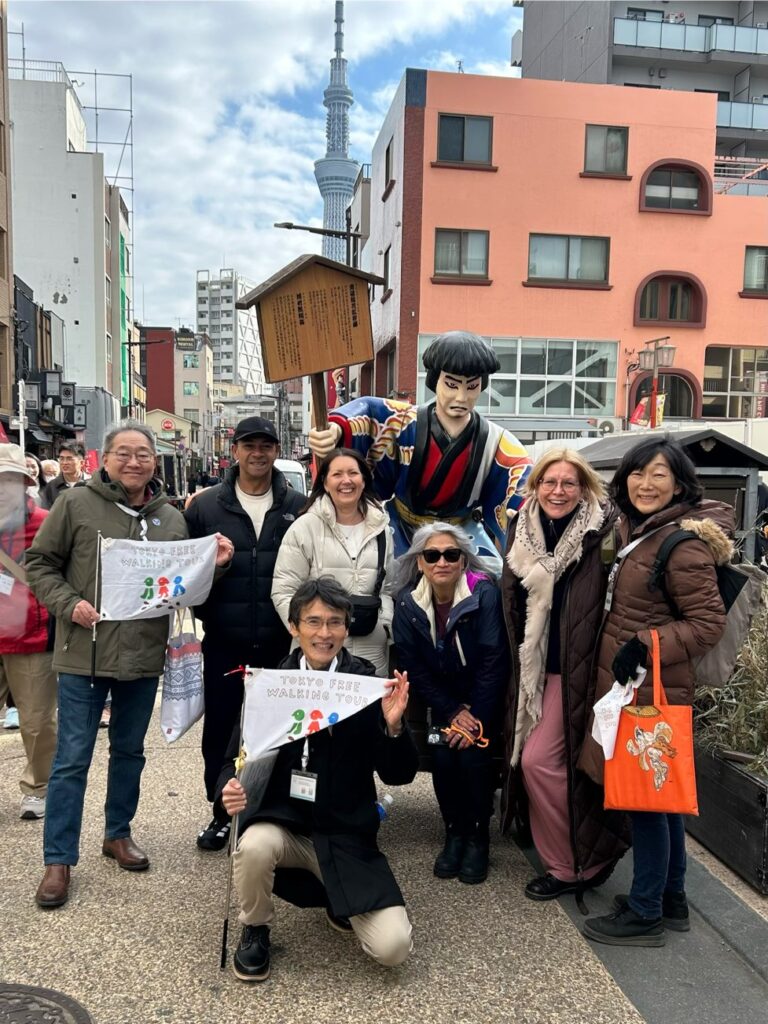
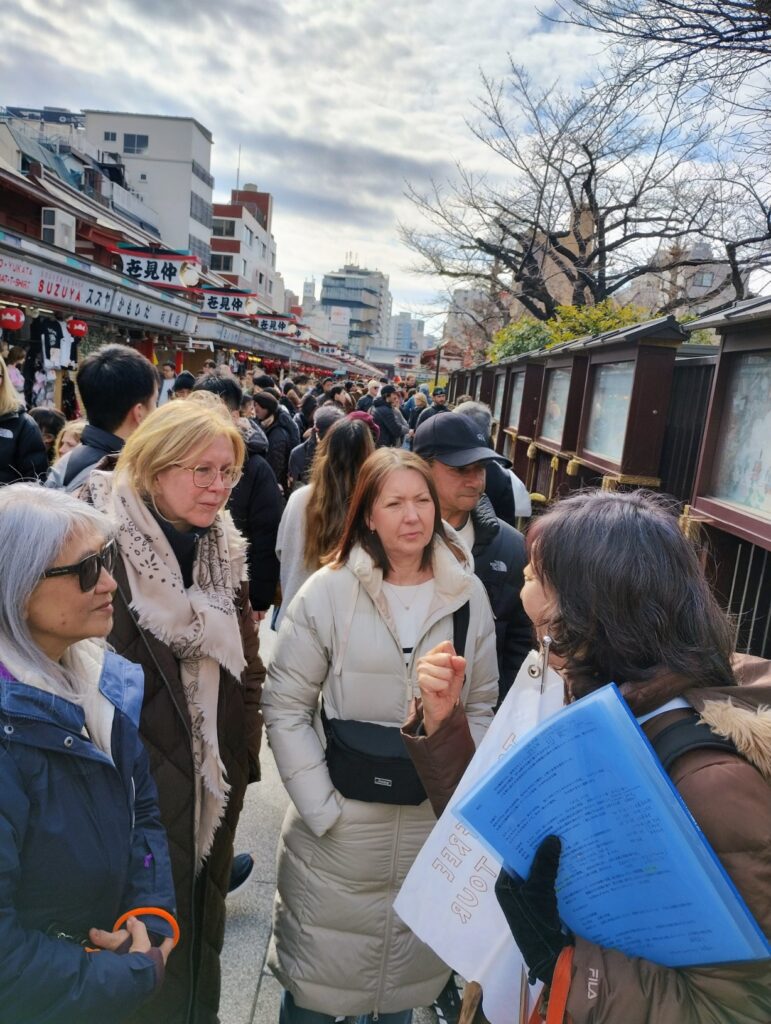
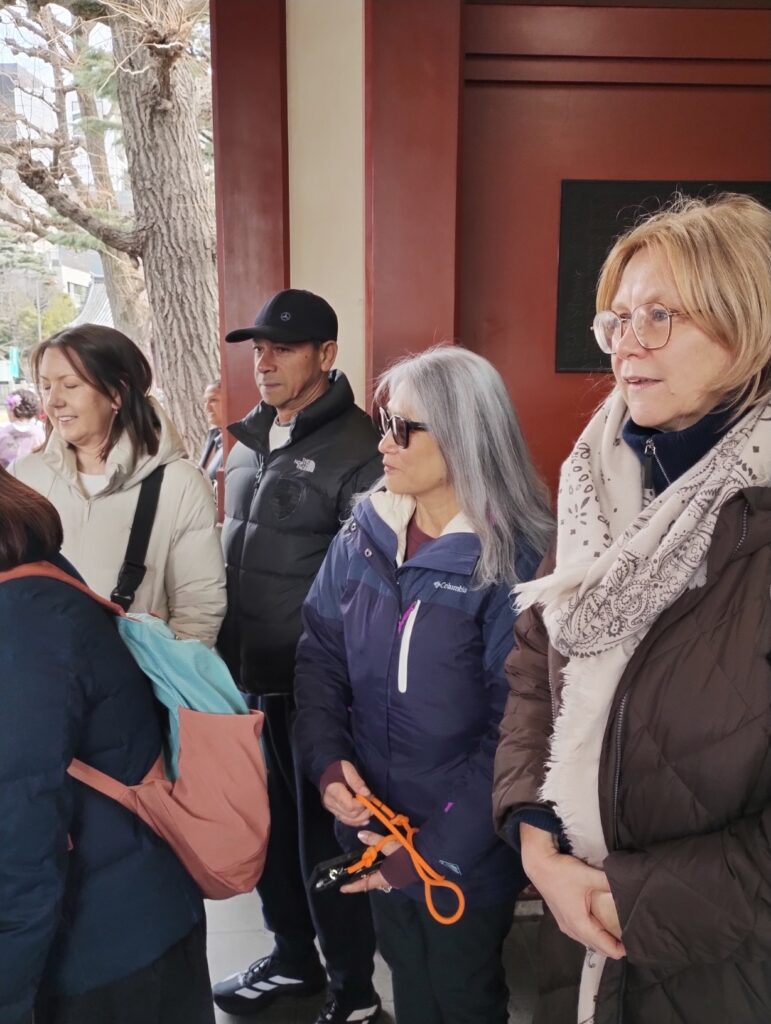
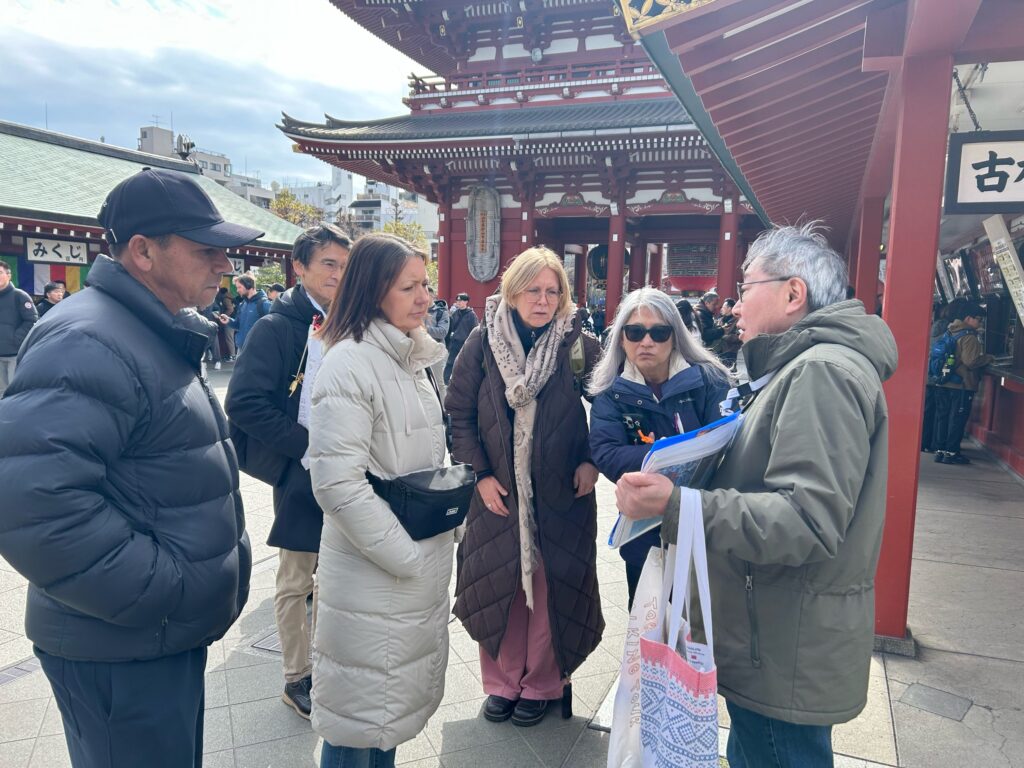
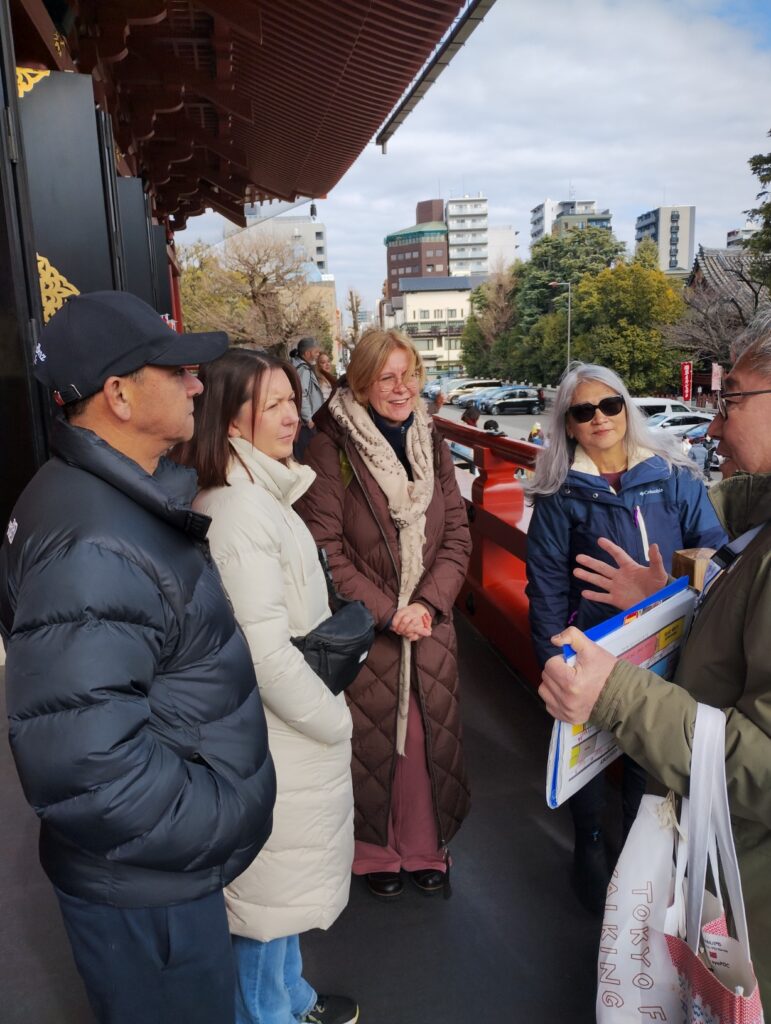
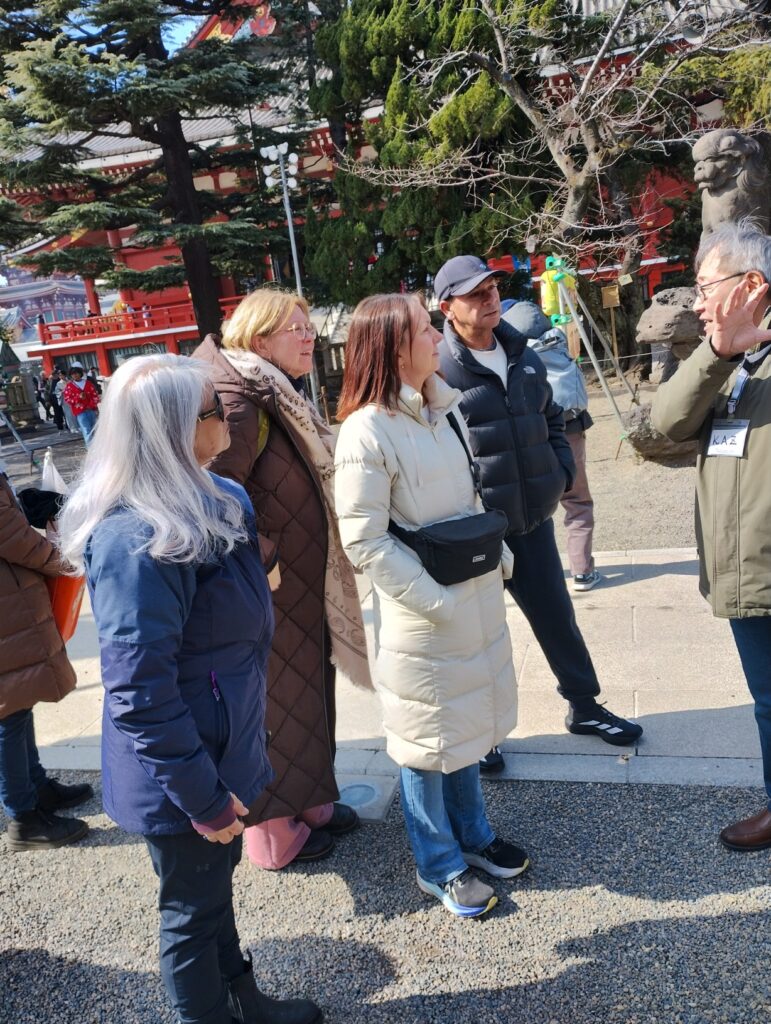
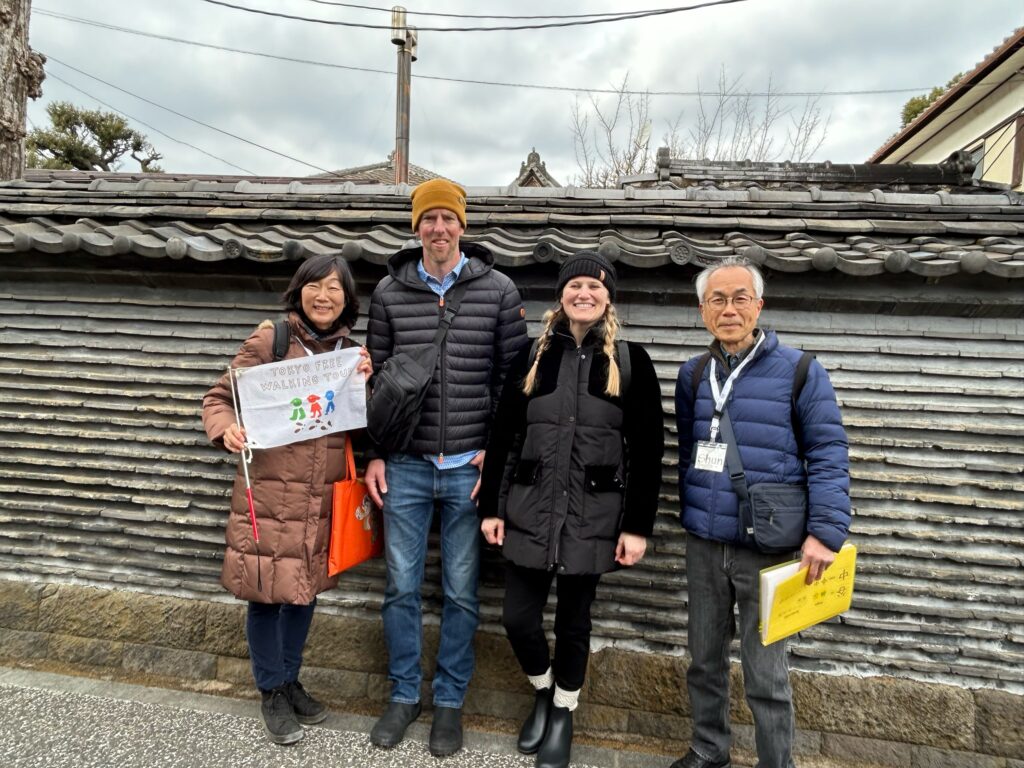
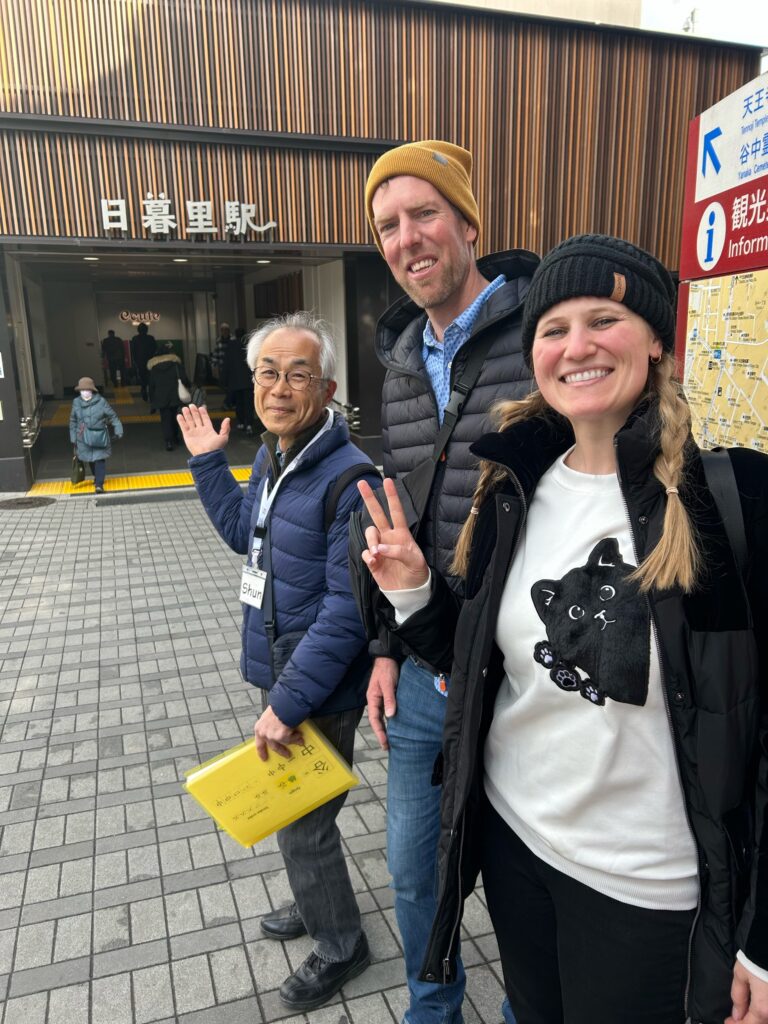
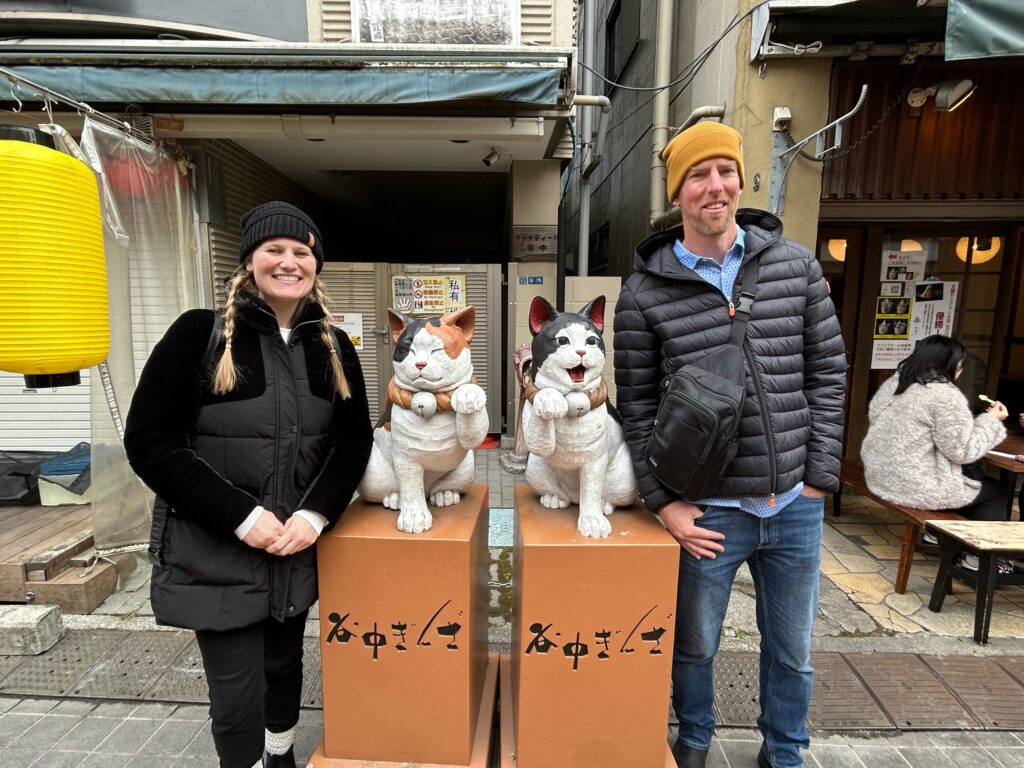
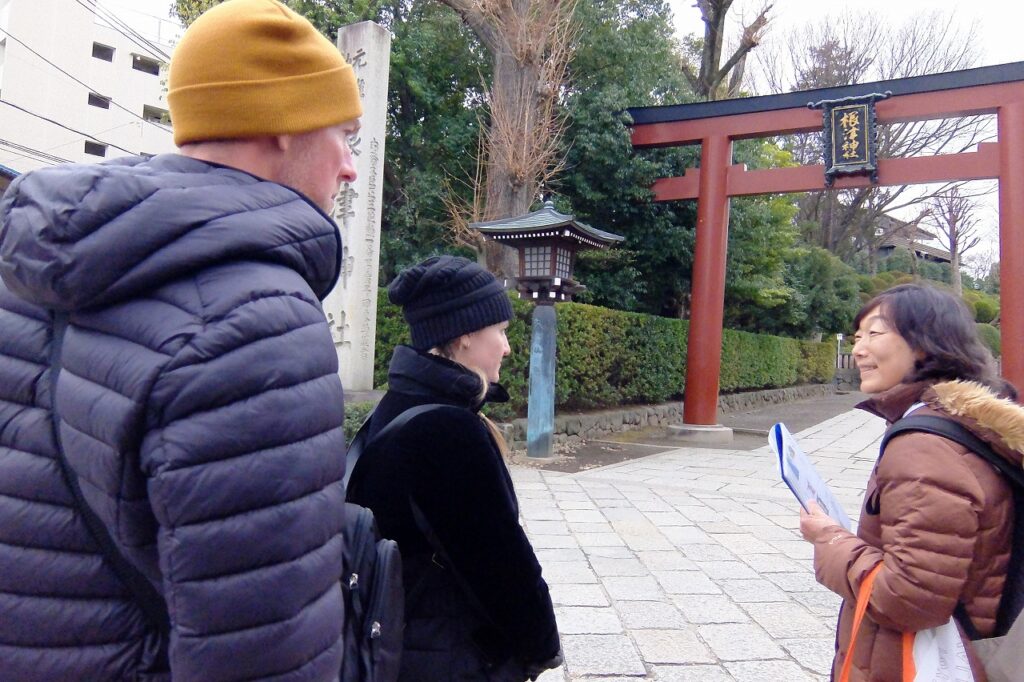
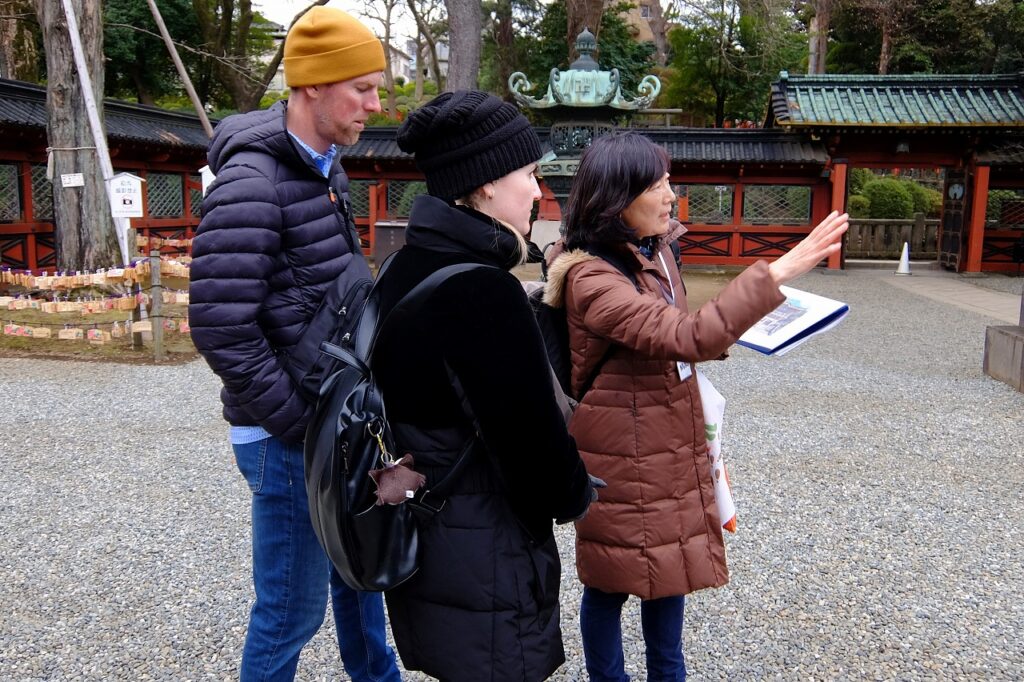
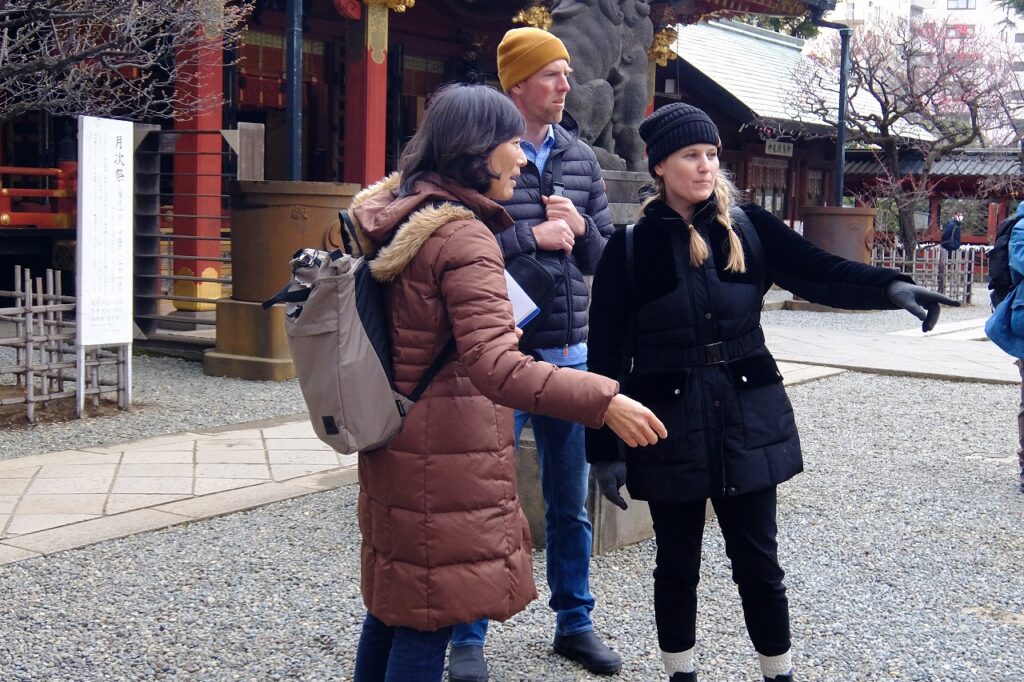
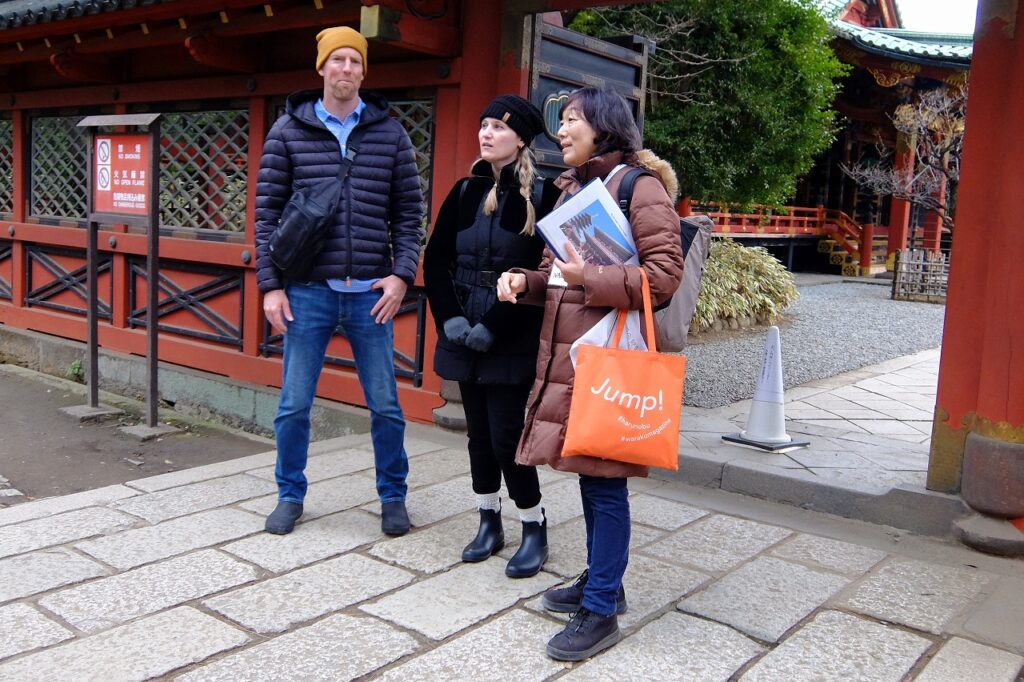
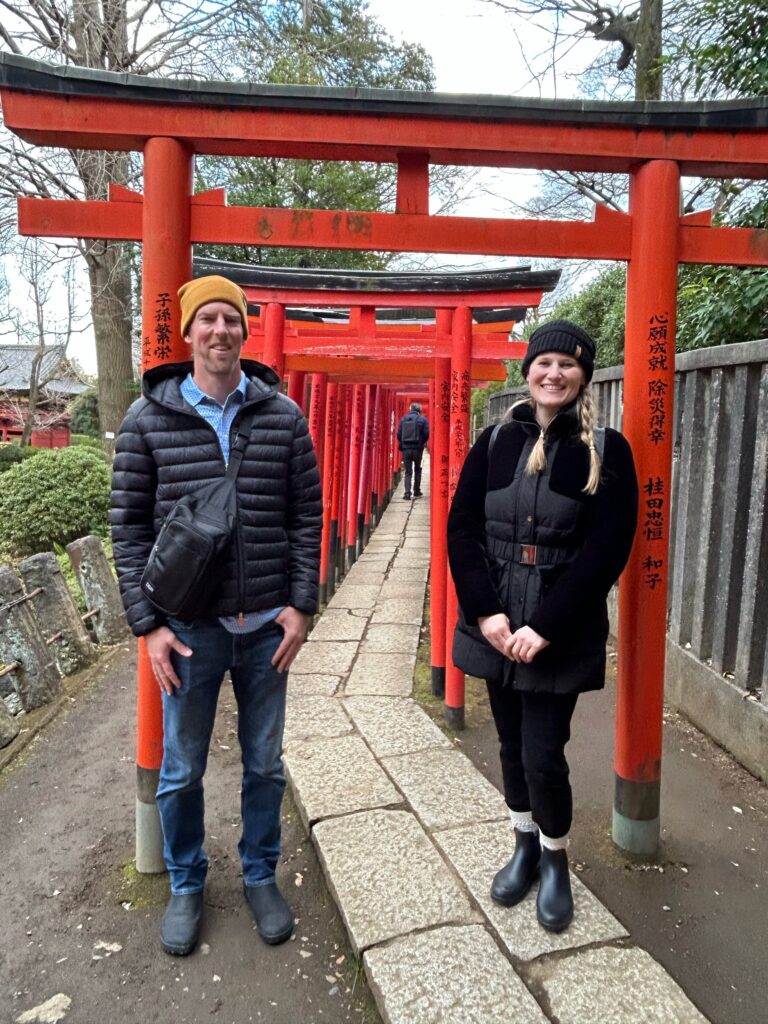
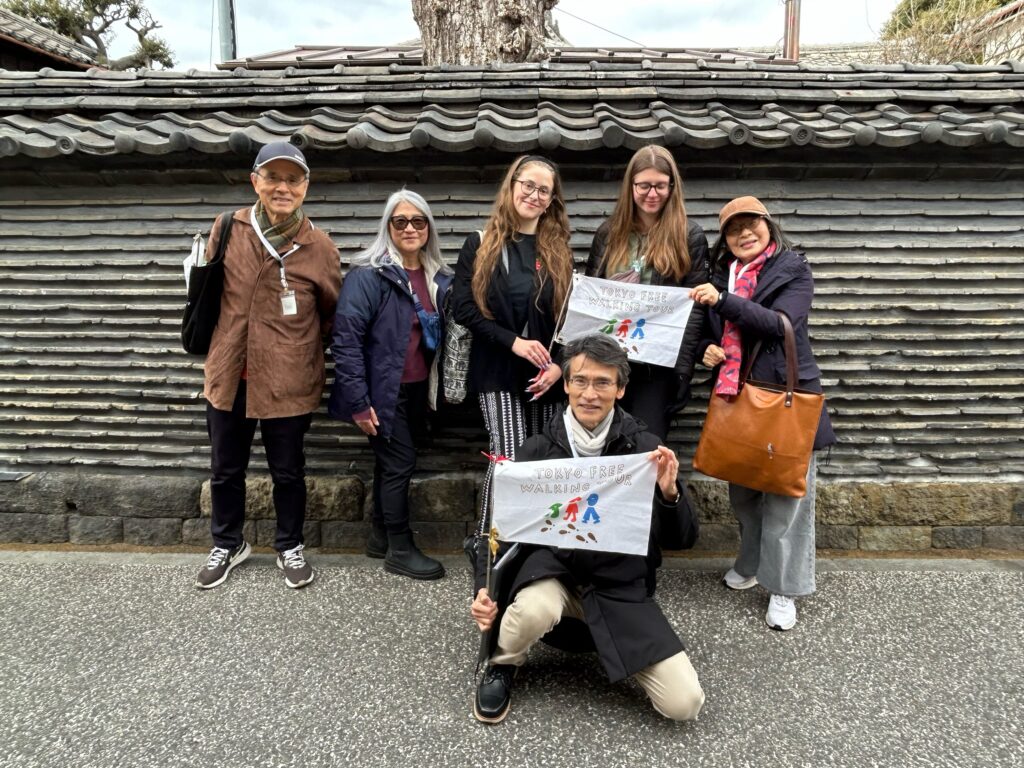
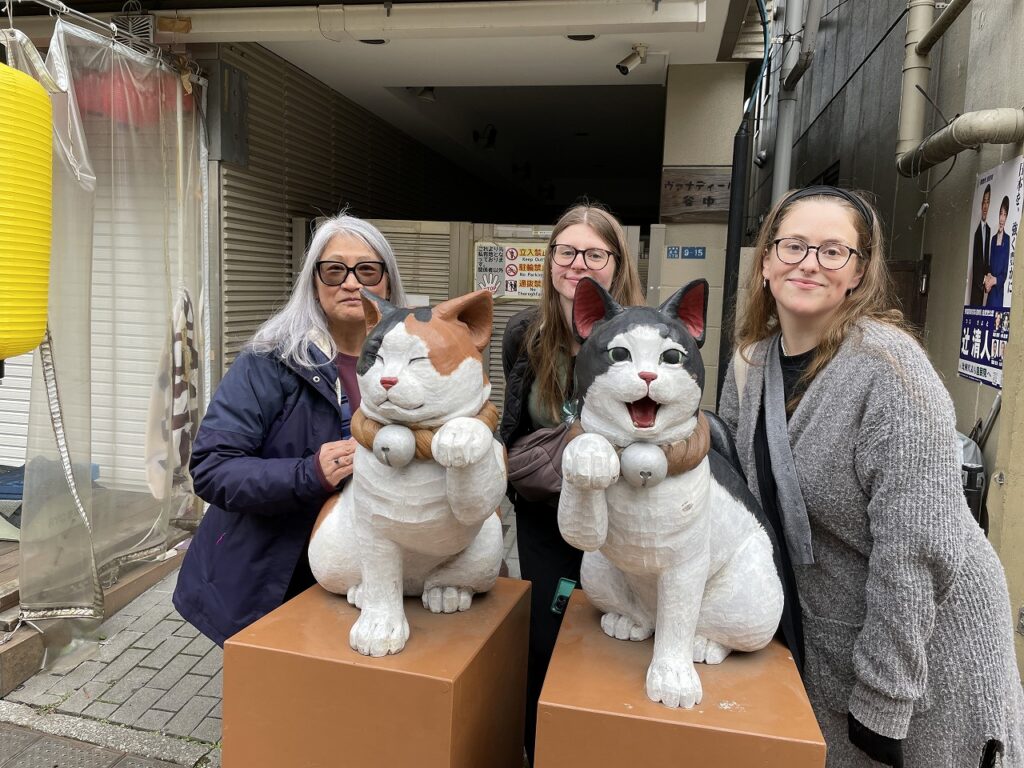
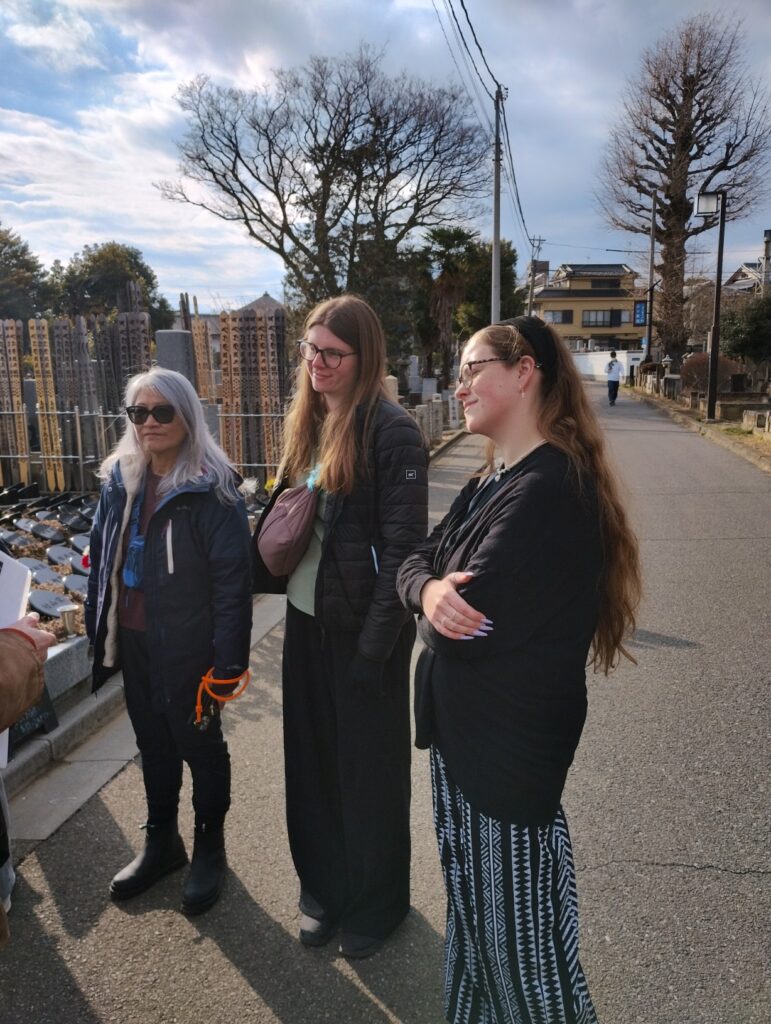
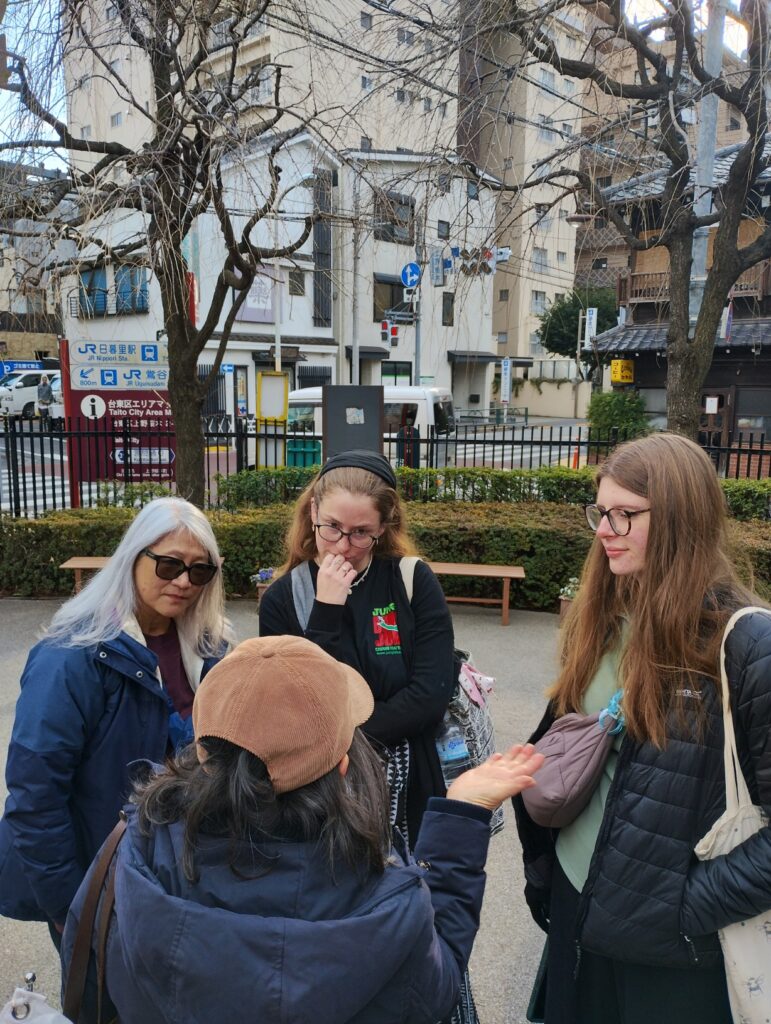
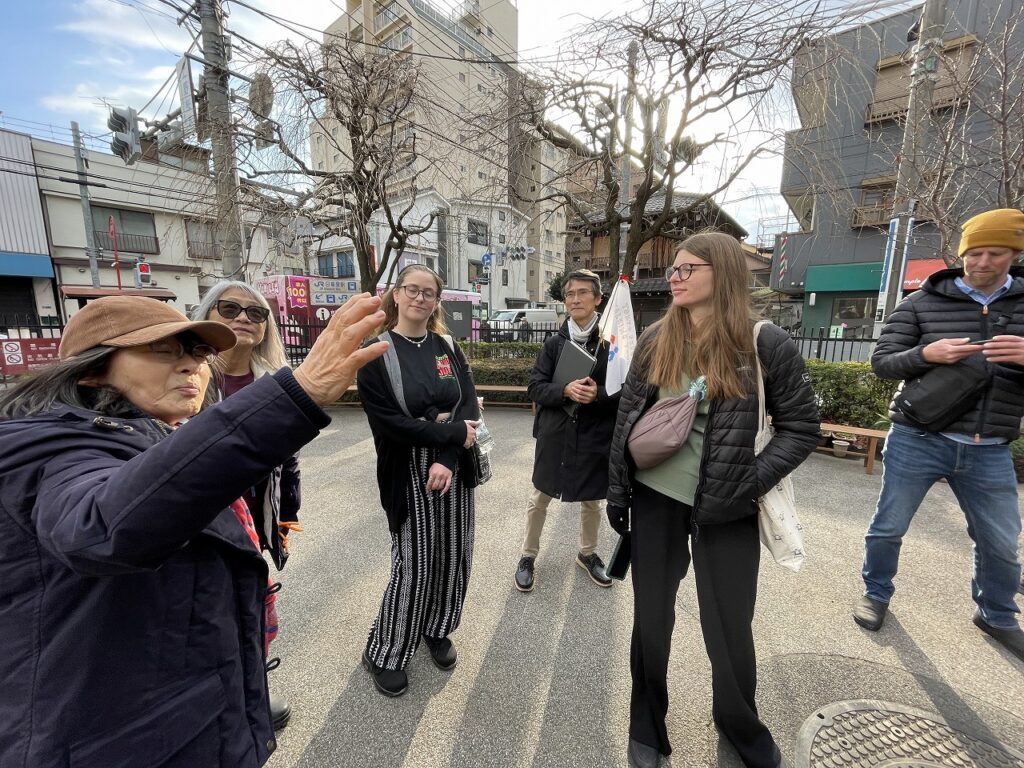
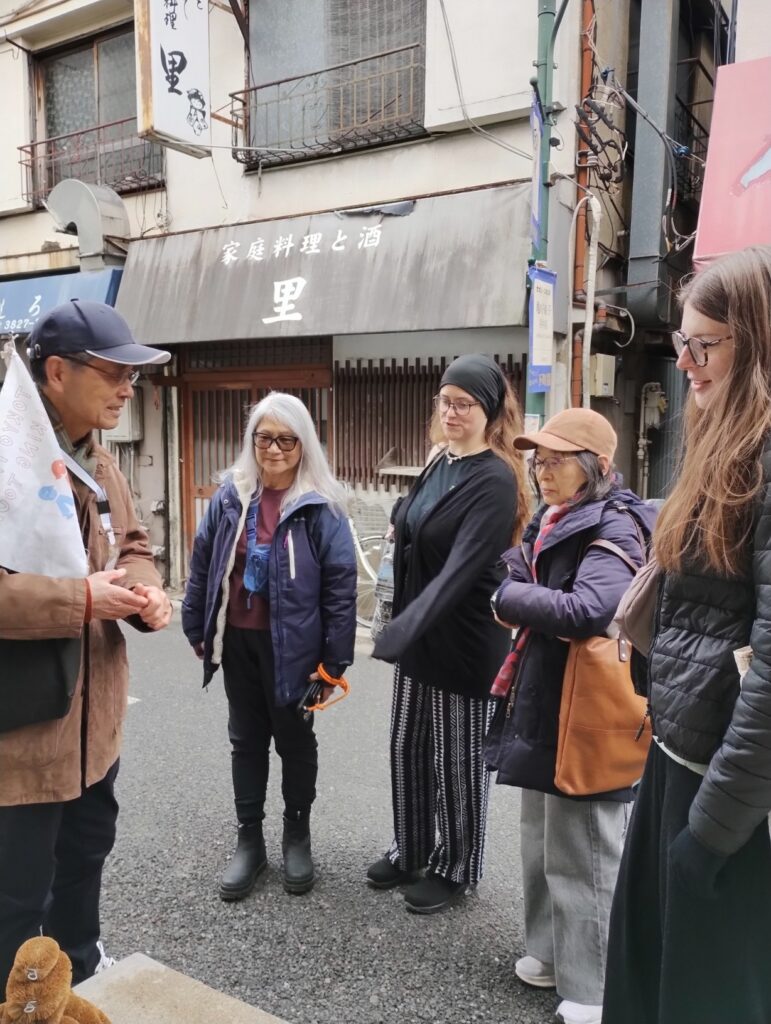
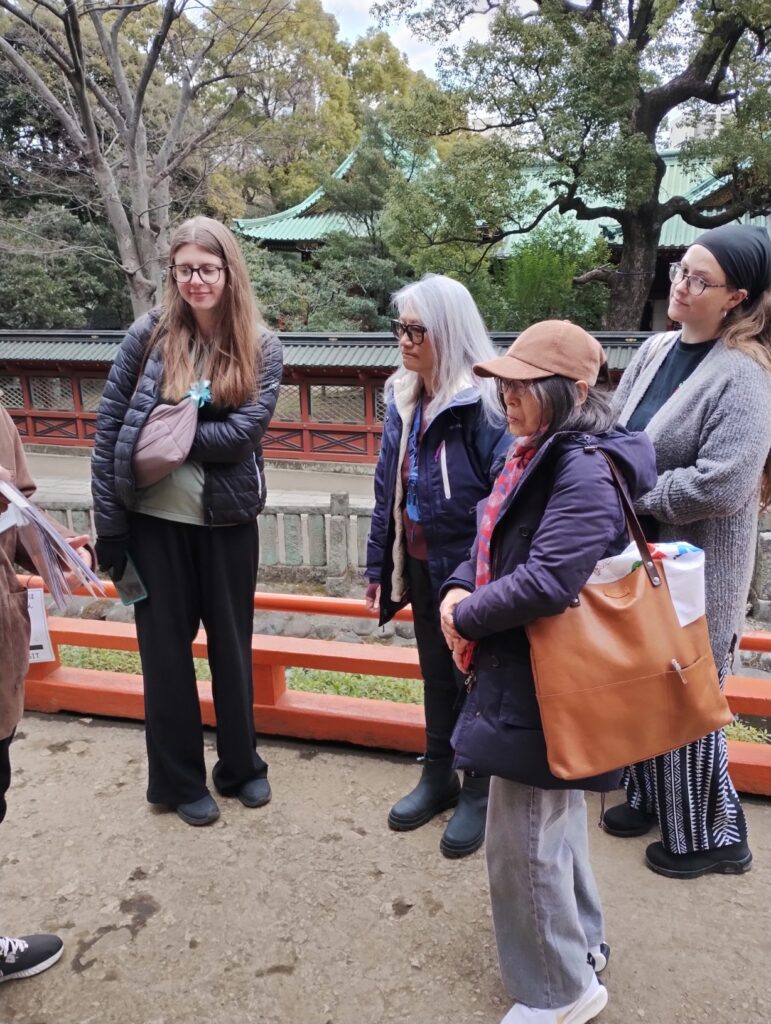
Group photos and snapshots from the tours are posted below, so you can look back on the fun moments we shared.
There is a well-known saying: “Fires and fights are the flowers of Edo.” Oh, don’t get me wrong. It does not praise disaster or violence. Rather, it reflects a characteristic spirit of Edoites (Edo locals) facing hardship with boldness and even humor.
But how come?
Continued in the latter half of the blog.
During the Edo period, which lasted about 260 years, the city of Edo suffered large-scale fires frequently. Many of them started with everyday activities like cooking, heating, smoking in futon (floor mattress), or kids playing with fire. It sounds familiar to us even today.
What about fights? Some say that Edoites are short-tempered and quick to start fight. Really? I am an Edoite myself, born in Ryogoku near Asakusa, yet I love peace.
There is a survey from the middle of the Edo period. It shows that men made up roughly two-thirds of Edo’s population, because merchants and artisans poured into the rapidly growing city from other provinces. Most of those single workers lived in densely built nagaya, or wooden rowhouses, which made small disputes common in Edo.
OK, now let’s say you understand fires and fights were common in the city of Edo, but how can we possibly call fires and fights “flowers”?
Here is my delusion: The term “flowers” here represents something striking and showy, and “fires and fights” specifically depicts the extreme situation at fire scenes. In short, the phrase “Fires and fights are the flowers of Edo” possibly expresses Edoites’ admiration for the bravery of the town volunteer fire brigades (machi-bikeshi) who risked their lives when confronting raging fires. On occasion, rival brigades clashed while competing for key positions or credit, and these dramatic scenes were likely regarded as cool and thrilling spectacles by the Edo commoners. Sounds plausible, right? Well, to be honest, I’m not quite positive, though.
Now then, where can we spot traces of those brave town fire brigades today?
In Asakusa, just behind Asakusa Shrine stands its small sub-shrine named Hikan Inari Shrine. The torii gate was dedicated by Shinmon Tatsugoro, head of the “Wo-gumi,” one of the 64 Edo’s town fire brigades. He was active in the late Edo period, and also served as a bodyguard to the last shogun, Tokugawa Yoshinobu.
In Yanaka, visit Suwa Shrine near JR Nishi-Nippori station. On the grounds, you’ll find a pair of komainu (guardian lion-dogs) donated by the “Re-gumi,” a brigade that covered Yanaka, Sendagi, Nezu, and Ikenohata with 219 firefighters. The characters “Re-gumi” are engraved in red on the pedestals of the statues.
One last thing. In fact, the spirit of the Edo-period town firefighters isn’t gone yet. It has surely been passed down to the modern volunteer fire brigades … the topic I plan to cover in a future post.
Once again, thank you very much for joining Tokyo Free Walking Tour during your stay in Tokyo. If you have another opportunity to visit the city, we would be happy to help you have more wonderful experiences in spots such as the East Gardens of the Imperial Palace, Asakusa, Meiji Shrine and Harajuku, and Ueno.
For more information about our tours, please visit our website or social media pages:
https://tfwt.jp/top/
https://www.facebook.com/TokyoFWT
Tokyo Free Walking Tour on TripAdvisor: https://www.tripadvisor.jp/
Posted by Shun