
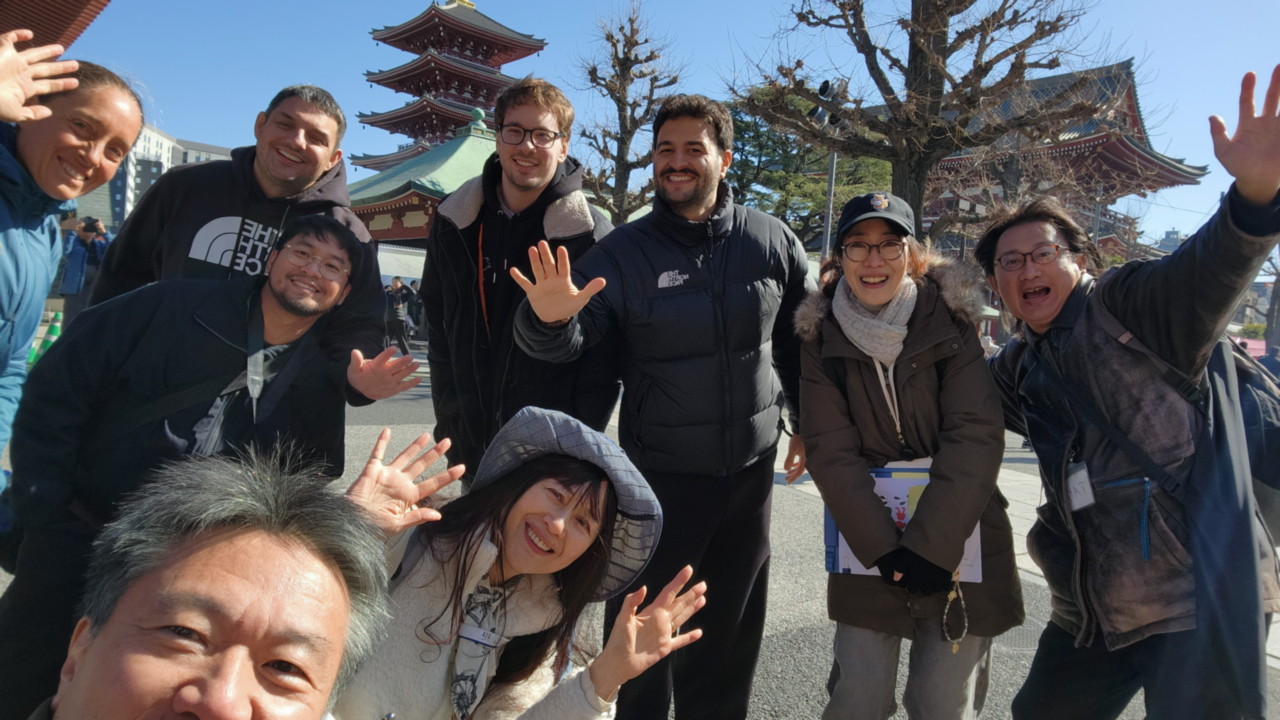
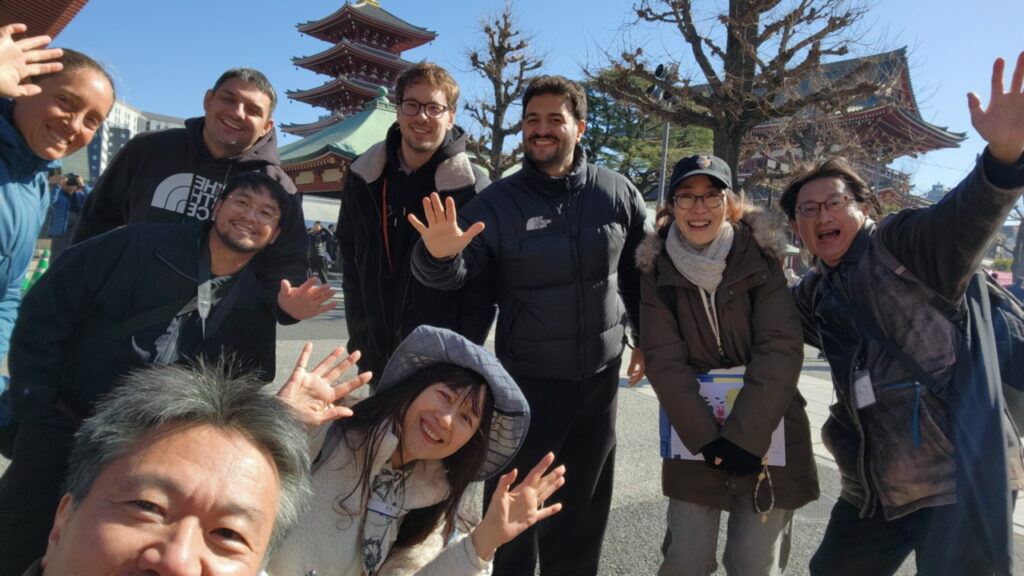
Thank you very much for joining our tours in Asakusa and Yanaka/Nezu on January 31, 2026.
We were delighted to welcome 15 wonderful guests from Australia, the United States, Spain, and New Zealand. It was a great pleasure to share conversations with you while exploring the history and charm of Asakusa and Yanaka/Nezu together. We sincerely hope that each of you discovered something memorable along the way.
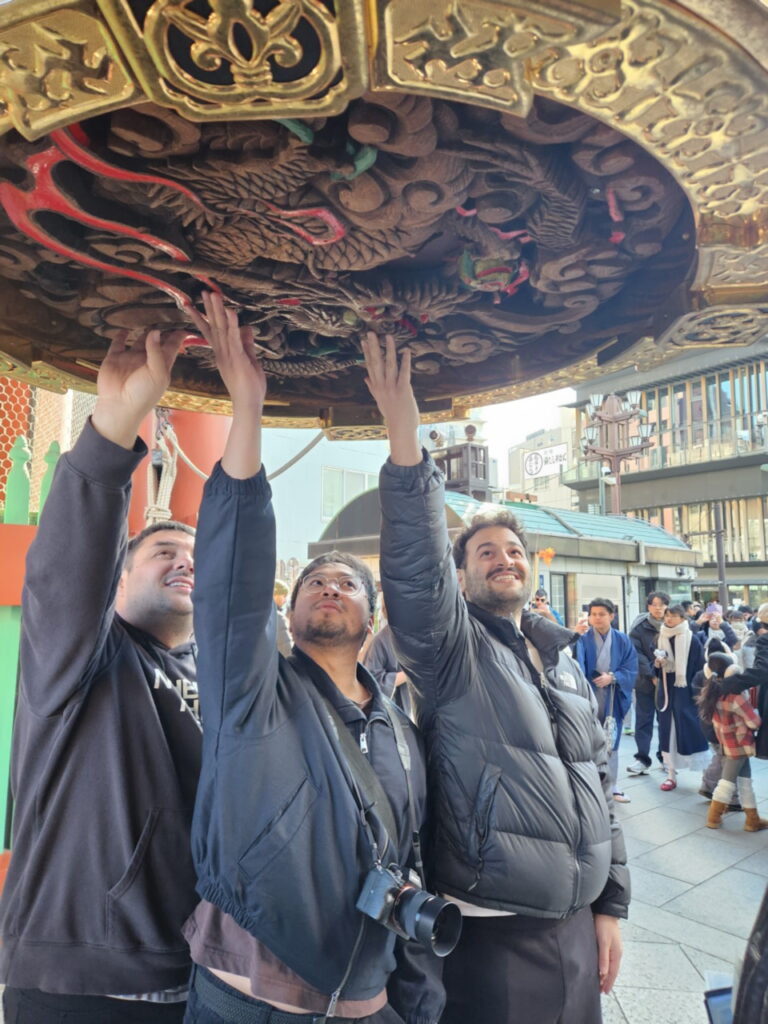
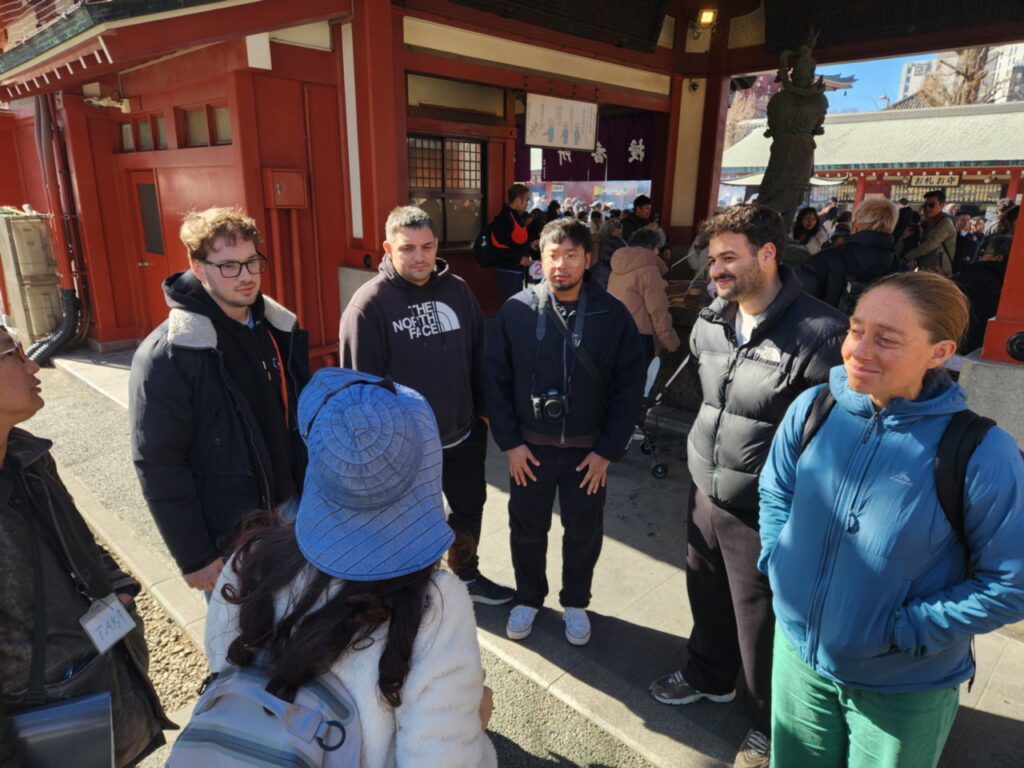
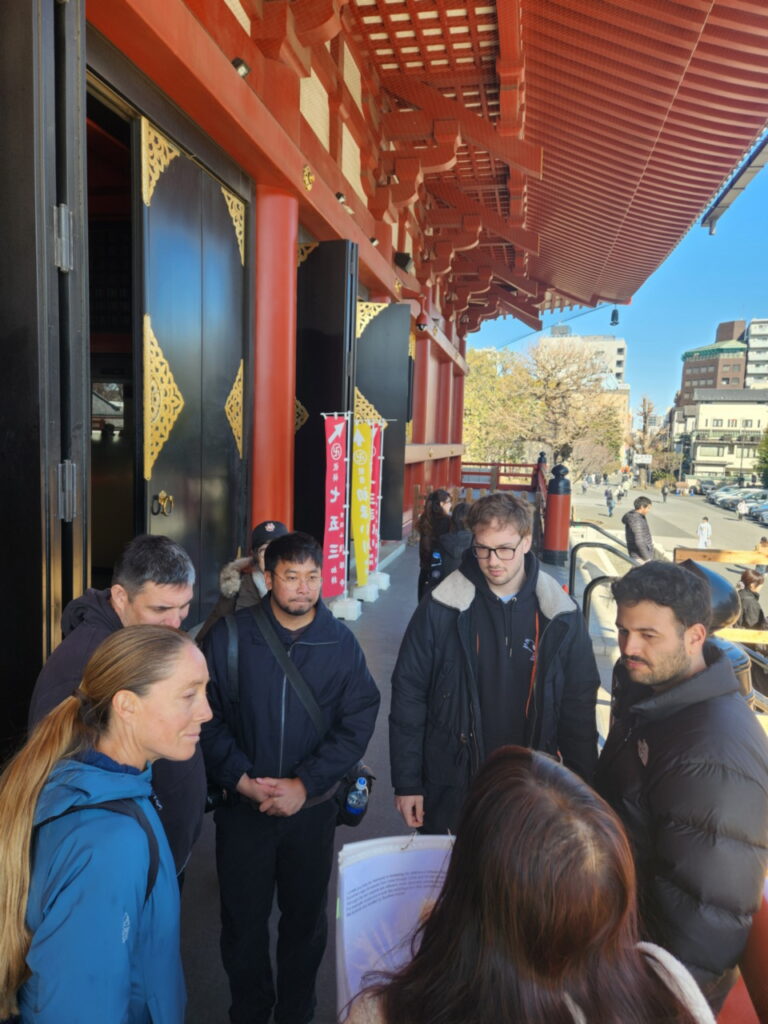
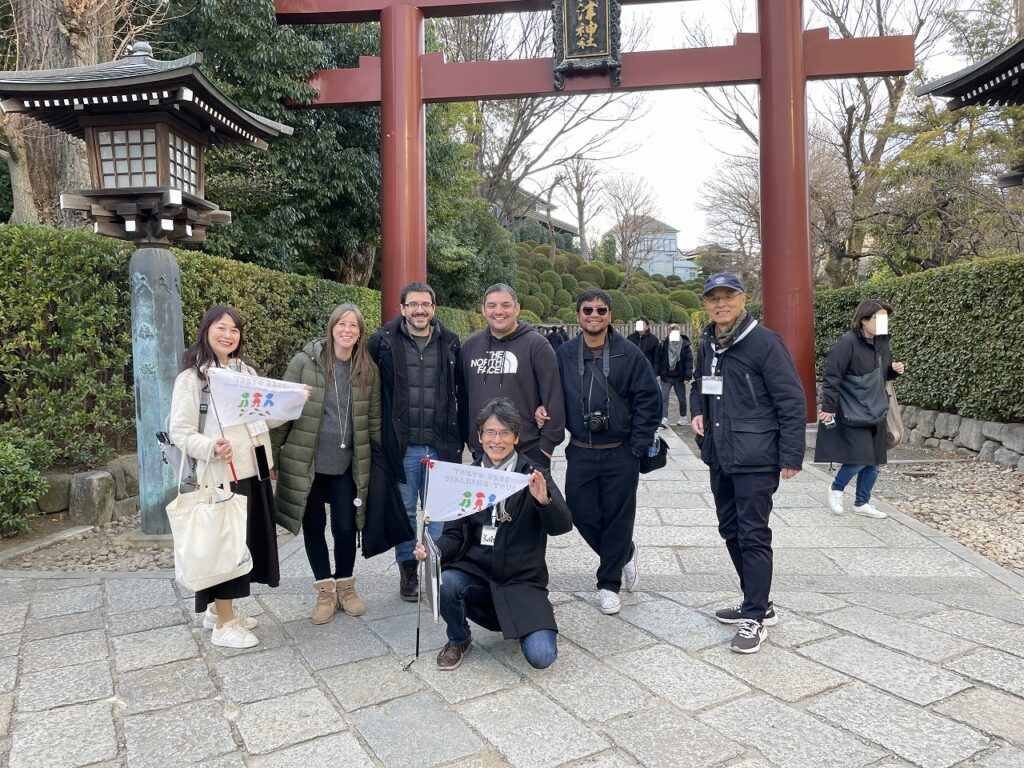
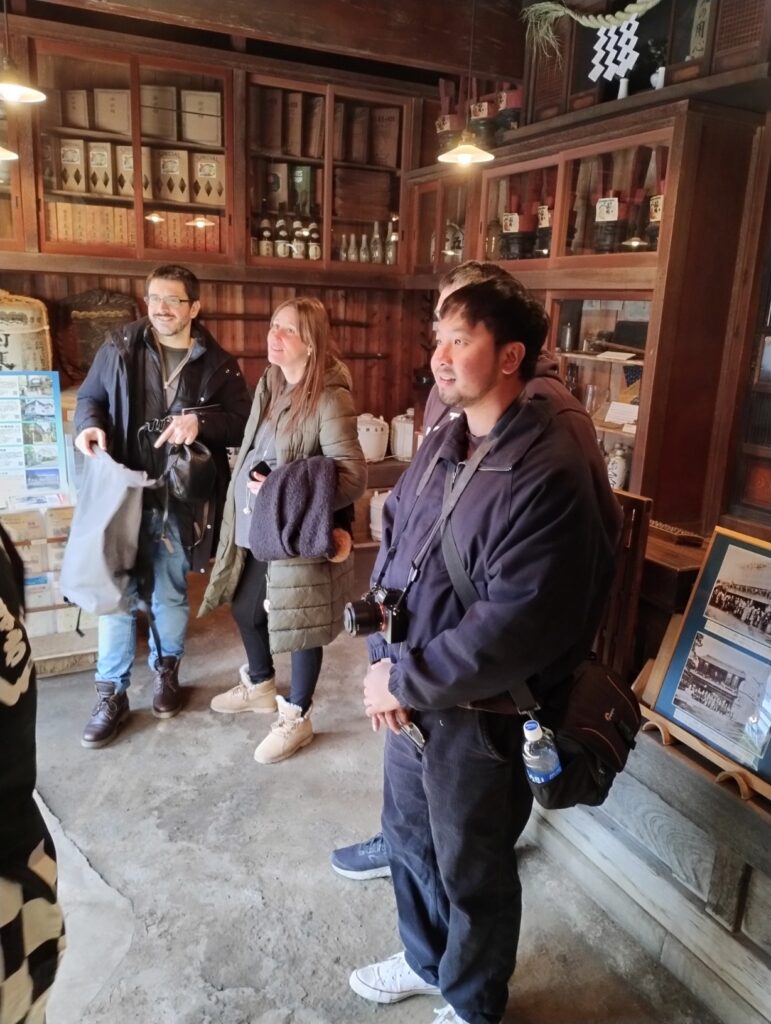
Group photos and snapshots from the tour are posted below, so you can look back on the fun moments we shared.
Strolling through the precincts of Senso-ji or Nezu Shrine, some of you may have wondered, “Why does Asakusa Shrine stand side by side with Sensoji Temple?” or “Why does Nezu Shrine use a left-facing Buddhist manji (swastika) symbol as its shrine crest?”
Are kami and Buddha the same for Japanese people?
Well, not exactly. But the story is uniquely Japanese.
Continued on the latter part of this blog.










Here is the answer to the title question.
Before the Meiji Era, Shinto and Buddhism were closely united in Japan for more than 1,200 years. This relationship is called the syncretism of Shinto and Buddhism. Its concept was supported by a generally accepted theory that Indian Buddhas and Bodhisattvas appeared as Japanese deities to make it easier to guide and save Japanese people. (However, there is also a reverse theory, which views Buddhas and Bodhisattvas as manifestations of Japanese kami.)
Because of this long tradition, it was common to find a Buddhist temple within the grounds of a Shinto shrine, or a Shinto shrine standing beside a Buddhist temple. Such coexistence was taken for granted by Japanese people for a long time.
However, the situation changed dramatically with the Meiji Restoration in the late 19th century. The new government ordered a strict separation between Shinto and Buddhism. Its main goal was to establish Shinto as the spiritual foundation of the new modern nation and to promote the Emperor as a divine figure who could unify the country after the fall of the Tokugawa shogunate.
At the same time, the government sought to weaken Buddhism, which had long been closely associated with the Tokugawa regime and therefore symbolized the old order. As a result, Shinto shrines across Japan were required to remove all the Buddhist elements from their precincts.
Now let’s go back to the story of Senso-ji Temple and Nezu Shrine.
The origins of Sensoji Temple date back to the early 7th century, when two fisherman brothers discovered a statue of the Kannon Bodhisattva caught in their net in the Sumida River. A local leader, Haji no Manakatomo, enshrined the statue, which later became the principal image of Sensoji Temple. According to the Shinto idea of the deification of great figures, these three figures were later enshrined as kami (deities) at Asakusa Shrine. Since Sensoji Temple exists precisely because of the discovery of the Kannon statue, moving the shrine elsewhere would mean denying the very origins of the temple itself. Of course, there are other factors. For example, the overwhelming popularity of both Sensoji Temple and Asakusa Shrine among common people must have played an important role.
Now let’s turn to Nezu Shrine.
Nezu Shrine holds a special status in Tokyo’s religious history. When Tokyo became the new capital in the late 19th century, the Meiji government designated twelve important shrines in Tokyo and its surrounding areas as Jun-Chokusai-sha, or “quasi-imperial shrines.” These shrines were intended to form a spiritual barrier to protect the Imperial Palace. Nezu Shrine was one of them.
Thanks to its long history, high prestige, and cultural significance, Nezu Shrine’s buildings were preserved mostly in their original Edo-period form. This is one of the reasons why traces of Shinto-Buddhist syncretism, including its shrine crest, remain visible even today.
If you have the chance to visit both Asakusa and Yanaka/Nezu, by comparing the two, you’ll be able to understand Japanese religious culture better, and hear hidden stories that you won’t find in guidebooks. We’d be delighted to share them with you on our tour. Why don’t you join us next time?
Once again, thank you very much for joining Tokyo Free Walking Tour during your stay in Tokyo. If you have another opportunity to visit the city, we would be happy to help you have more wonderful experiences in spots such as the East Gardens of the Imperial Palace, Asakusa, Meiji Shrine and Harajuku, Ueno, and Yanaka/Nezu.
For more information about our tours, please visit our website or social media pages:
https://tfwt.jp/top/
https://www.facebook.com/TokyoFWT
Tokyo Free Walking Tour on TripAdvisor: https://www.tripadvisor.jp/
Posted by Shun